| Study | Design & population | Finding & comparison |
|---|---|---|
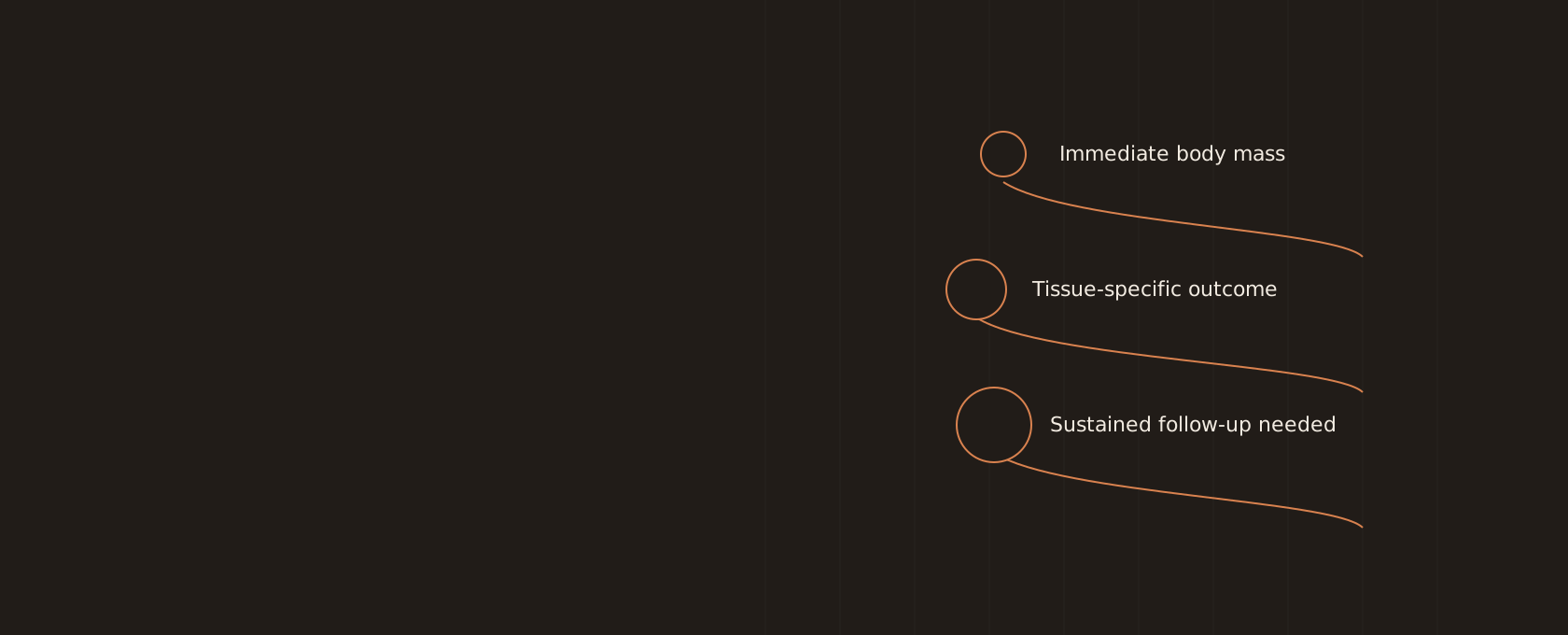
| 2019 · Podstawski R ↗ | Acute repeated-exposure physiology study Overweight, sedentary, infrequent sauna users Participants: 45. Dry sauna | Physiological strain increased across repeated exposures and correlated with body size; the observed immediate body-mass decrease does not establish fat loss. Comparison: Repeated exposures and correlations with body size No separate control described |
| 2021 · Toro V ↗ | controlled body-composition experiment healthy Participants: 23. high-temperature sauna · 12 sessions | Selected regional DXA measurements changed; the abstract does not establish generalized fat loss. Comparison: control versus sauna; post-exposure and follow-up measurements Small sample; regional multiple outcomes; unusual values merit full-text checking. |
| 2025 · Lebron MA ↗ | test-retest experimental reliability study healthy Participants: 15. portable infrared sauna · two trials at least 72 hours apart | The protocol produced repeatable dehydration measurements for laboratory research. Comparison: repeat of the same dehydration protocol Deliberately induced dehydration; not a weight-loss or personal-use protocol. |
Does a lower post-sauna weight establish fat loss?
No. It shows that measured body mass changed over that interval, not which compartment changed or whether the difference lasts. The sauna sources include acute scale observations and experiments deliberately designed to produce dehydration. Those outcomes are different from a sustained reduction in body fat.
A useful weight-management claim needs the relevant endpoint and follow-up. A number recorded around one visit cannot supply a lasting tissue outcome, and a repeated laboratory fluid-loss procedure is not a fat-loss intervention merely because the scale changes reliably. The paper’s purpose matters as much as the direction of the reading.
This guide assigns D to a sustained fat-loss promise from the evidence discussed here. That grade does not deny that heat elicits physiological responses or that someone may enjoy sauna. It identifies a specific benefit claim that these studies do not establish. The appropriate response is to preserve the actual outcome rather than choose a stronger label for it.
What can a scale measurement tell a reader?
A scale measures total body mass, not a direct separation of fluid, fat and other tissue. The portable-infrared reliability experiment makes that distinction especially clear: its intended mass loss was dehydration for a research method. Reproducible change therefore did not establish a beneficial tissue response.
The interpretive question is not whether a lower reading is imaginary. A measurement can change genuinely while answering a different question from the one a reader cares about. If the goal is lasting fat reduction, the assessment must identify that outcome over a suitable interval. A short-term body-mass result cannot do so alone.
This is why an immediate scale difference should not be translated into a promise about clothing fit, long-term weight or fat reduction. The source needs to demonstrate the claimed outcome, rather than rely on a familiar number whose meaning has shifted between the measurement and the headline.
What happened in sedentary overweight men?
An acute repeated-exposure study in young sedentary overweight men observed a lower body-mass reading alongside increasing physiological strain across the sequence. Larger body-size characteristics correlated with stronger responses. These are useful observations about a selected population and a specific experimental setting.
They do not establish a long-term program for reducing body fat. Participants were not randomized to body-size categories, and a correlation between a characteristic and a response does not identify a personal safe limit. The abstract also does not describe a separate non-heated control that resolves every contribution to change.
The body-mass outcome and strain pattern should therefore remain separate. A larger or more stressful response is not evidence of a larger health benefit. This page does not turn the study into a duration chart, a target scale change or a sequence for readers to reproduce. Its value is better interpretation of an acute result.
Did the controlled body-composition study establish generalized fat loss?
No generalized fat-loss finding is established by its abstract. The small study of a sauna series in healthy young men reported selected regional DXA outcomes, involving muscle-related and bone measurements. Those are not equivalent to a whole-body reduction in fat.
A change reported for a particular region cannot automatically be extended to every limb or tissue compartment. Several measurements were considered, making the full outcome set, uncertainty and analysis important to a complete appraisal. The abstract does not establish random allocation simply because it describes a control group.
Some regional numerical reporting also requires fuller checking. This page does not reproduce those figures or silently resolve their unusual presentation. The cautious qualitative interpretation is enough for the weight question: the source does not supply the missing evidence that sauna produces generalized or sustained body-fat reduction.
What should be checked before interpreting a composition comparison?
The timing and preparation for each measurement matter to interpreting what was compared. The regional study includes post-program and later assessments, while the acute study recorded composition characteristics before the exposure and body mass around the visit. These are different measurement arrangements rather than interchangeable demonstrations of tissue change.
The abstracts do not resolve every preparation detail, including how hydration-related circumstances were handled between assessment occasions. That uncertainty should remain a question for full-text review. This guide does not claim that hydration caused the regional DXA findings or import a new general measurement result into this evidence base.
The practical reading discipline is to ask what instrument measured which compartment, on what occasion and under which reported conditions. A stronger interpretation should wait for those details rather than assuming that every later measurement necessarily represents lasting fat change.
Did a short program in Korean adults change body composition?
A short uncontrolled study in Korean adults reported better quality-of-life scores, but no significant change in body composition, BMI, pressure or heart rate. This is a useful example of why a favorable outcome in a paper does not establish the particular outcome a reader is seeking.
The subjective and objective results should remain distinct. Feeling better is a different observation from a demonstrated body-composition change. The study also lacked a separately described untreated comparator, so its before-and-after design does not isolate every reason for the reported wellbeing result.
Its population and follow-up differ from the young male regional study and the acute sedentary-men experiment. None should be used as a substitute for the others. Together, they show a limited and varied evidence base rather than a consistent controlled demonstration of a lasting weight-management benefit.
Does repeatable dehydration make a weight strategy effective?
No. The portable-sauna study assessed reliability of selected dehydration measurements over repeated research visits. Reliability concerns consistency. It does not establish that the measured state is beneficial or that deliberately producing it improves long-term weight, performance or recovery.
That purpose should remain visible when the source is discussed outside a laboratory context. A repeated procedure can produce a predictable scale response without becoming a validated public routine. The study did not test a personal athletic weight-cutting strategy, and this guide provides no target loss or instructions for pursuing one.
The appropriate takeaway is methodological. Research teams may need a consistent challenge to study another question. Readers should not infer a health recommendation from the success of that method. A fluid-loss endpoint remains a fluid-loss endpoint even when the protocol has a formal reliability analysis and an apparently practical device.
What does the intestinal-barrier challenge add to the picture?
A separate randomized-order experiment deliberately used sauna dehydration as a physiological challenge. It found greater upper-intestinal permeability and selected inflammatory signals without changes in reported enterocyte-injury markers. The experiment was not designed as a wellness or weight-management routine.
This context matters because pursuing a larger scale decrease should not be treated as a simple route to a larger benefit. A deliberate stress model can elicit measurements useful to researchers without identifying an outcome public users should seek. The study also cannot quantify the effect of every ordinary sauna visit, whose conditions may differ.
The balanced interpretation therefore avoids both an invented weight-loss recommendation and a universal harm claim. It retains the challenge’s actual purpose, exposure distinction and measured responses. Neither the absence of an injury-marker change nor the presence of a permeability change supplies a personalized dehydration threshold.
Do acute energy measurements prove a fat-loss outcome?
They do not establish that outcome by themselves. The sedentary-men study examined physiological variables and their correlations with body characteristics during a visit. It did not demonstrate that an estimated acute energy response led to sustained body-fat reduction.
A result about energy expenditure and a result about tissue change are different claims. Connecting them requires appropriate measurements and follow-up, rather than a numerical conversion chosen after the fact. This page therefore does not provide a calorie-to-fat equation, a promised weight change per visit or a schedule based on accumulating heat exposure.
The same discipline applies when someone combines sauna with other activities. A later change in weight during a broader lifestyle program would require a comparison capable of identifying the added contribution of sauna. The acute sources discussed here do not provide that answer simply because a physiological response was measurable.
| Study outcome | What the source can describe | What it does not establish |
|---|---|---|
| Acute body mass | A scale change around a visit | Lasting body-fat reduction |
| Deliberate dehydration reliability | Consistency of selected research measurements | A beneficial personal weight target |
| Regional DXA outcomes | Selected anatomical measurements after a series | Generalized fat loss |
| Quality of life | A subjective before-and-after outcome | Significant body-composition change |
Has a lasting weight-management sauna routine been established?
The cited sources do not establish one. They ask different questions using different people, measurement windows and study structures. An acute mass change, a regional composition observation and a reliability protocol cannot be assembled into a tested fat-loss program by selecting attractive details from each.
The systematic review of dry sauna interventions also described a heterogeneous literature with small studies and unresolved questions about optimal exposure in different settings. Its broad coverage should not be used to create a precise weight-loss routine that no included source tested.
A planning or hydration tool can display assumptions and help a user understand what a calculation means. It cannot validate a fat-loss claim, set a personal dehydration target or replace clinical advice. The useful role of this evidence is to clarify what has been measured, rather than to make an unconfirmed promise more precise through a calculator.
How should weight-related goals and safety be kept separate?
A desire to change body weight does not establish that a deliberate heat challenge is suitable. The historical safety review names unstable angina, recent myocardial infarction and severe aortic stenosis among contraindications and identifies alcohol-related concerns. It is not an exhaustive personal screening system.
People with a medical condition or medication question should discuss intended sauna use with a qualified clinician. A group-average scale response cannot determine eligibility, and a research procedure designed to create fluid loss is not a clinical weight-management plan.
This page does not specify a target dehydration level, an exposure limit or instructions for making weight. Those would add an individualized intervention question beyond the reviewed evidence. Keeping that boundary explicit also avoids presenting a laboratory’s need for a reproducible stressor as a recommendation for readers whose health, monitoring and purpose differ.
What better evidence would a sustained fat-loss claim require?
It would need a relevant population, an appropriate comparison and a clearly measured tissue outcome over useful follow-up. The design would also need to distinguish the added contribution of sauna from other changes in a broader program. Repeated scale readings alone would not settle every part of that question.
This synthesis is based on refreshed indexed abstracts and registered source findings. Full-text measurement methods, formal risk of bias, funding and conflicts of interest were not comprehensively assessed. Unreported details remain unknown, and unusual regional figures are not promoted as verified effects.
The proportionate conclusion is therefore specific: sauna can change immediate body mass in the studied settings, while a sustained body-fat benefit is not established by these sources. Readers can value the activity without assigning it a weight-management result the evidence has not demonstrated. The D grade belongs to that benefit promise, not to every possible reason for using sauna.
Inspect the assumptions
Explore the session planner.
This planning tool describes a routine. It does not estimate a health benefit or provide medical clearance; the study exposures discussed above remain separate research methods.
Interactive workspace
In-memory checkpoint · no medical clearance
Pause for the personal context.
Check every item that applies or that you are unsure about. Current serious symptoms need appropriate care, not a tool result.
Context, with limits
- Checkpoint
- Complete the acknowledgment
A checklist cannot assess every relevant condition. No answer is medical clearance. Responses are in memory only, and are reset on reload.
Calculated on your device. Theme and unit preferences can be stored locally; health answers, weights and logs remain in memory. A shared settings URL contains its visible planning inputs.
Open the complete tool and methodologyExplore the evidence with a tool.
Questions, considered
Questions about this evidence
Can a lower scale reading identify which body compartment changed?
Not by itself. The cited sauna literature includes deliberate dehydration and acute body-mass observations, which differ from a measured sustained reduction in fat. A scale change can be genuine while answering a different question. The study must assess the tissue outcome and follow-up needed for the claim being made.
Follow the sourceWhy does the regional DXA paper not establish a whole-body weight benefit?
Its favorable findings concern selected regional measurements rather than a demonstrated generalized reduction in body fat. Regional outcomes should remain attached to their anatomical locations and assessment times. The unusual abstract figures also need fuller checking, so they should not become a numerical promise of tissue change for readers.
Follow the sourceCan improved wellbeing be used as evidence that body composition improved?
They are different outcomes. The short Korean study reported better quality-of-life scores while body composition and BMI did not change significantly. Its uncontrolled design also limits attribution. A favorable subjective result can remain meaningful to its question without being relabeled as a demonstrated weight-management or fat-reduction effect.
Follow the sourceDoes a repeatable fluid-loss experiment validate athletic weight cutting?
The portable-infrared study assessed a laboratory method, not the effectiveness or safety of a personal weight-cutting strategy. Repeatability means selected measurements behaved consistently across research visits. It does not make the resulting state beneficial or supply a target loss for public users, patients or athletes to pursue.
Follow the sourceWhy are hydration circumstances a review question rather than an explanation here?
The abstracts do not establish every preparation detail for the composition assessments. A full-text check should examine those circumstances before interpreting a measured change. This guide does not claim that hydration caused the regional results or use an unreviewed method assumption to turn the findings into either benefit or error.
Follow the sourceWhat would distinguish a real sustained fat-loss finding from an acute scale result?
A relevant study would identify the tissue outcome, compare appropriate groups and assess persistence rather than only recording mass around a heat exposure. It would also need to separate sauna from other program components. The current acute observations and research dehydration methods do not provide that complete weight-management comparison.
Follow the sourceFollow the evidence
Sources & references
Research summaries in this edition are based on indexed abstracts unless otherwise noted. A source link is not a claim of medical review.
- Correlations between Repeated Use of Dry Sauna for 4 x 10 Minutes, Physiological Parameters, Anthropometric Features, and Body Composition in Young Sedentary and Overweight Men: Health Implications.
Podstawski R, Borysławski K, Clark CCT, Choszcz D, Finn KJ, Gronek P
Volume 2019, pages 7535140 · PMID 30800676
Open-access flag: yes.Abstract-level editorial review - Effects of Twelve Sessions of High-Temperature Sauna Baths on Body Composition in Healthy Young Men.
Toro V, Siquier-Coll J, Bartolomé I, Pérez-Quintero M, Raimundo A, Muñoz D, Maynar-Mariño M
Volume 18, issue 9, pages 4458 · PMID 33922289
Open-access flag: yes.Abstract-level editorial review - Reliability of achieving target dehydration levels using a portable infrared sauna protocol in healthy young adults.
Lebron MA, Fukuda DH, Cregan JT, Shell JM, Wells AJ, Stout JR
Volume 22, issue 1, pages 2586598 · PMID 41320841
Open-access flag: yes.Abstract-level editorial review - Sauna dehydration as a new physiological challenge model for intestinal barrier function.
Roca Rubio MF, Eriksson U, Brummer RJ, König J
Volume 11, issue 1, pages 15514 · PMID 34330970
Open-access flag: yes.Abstract-level editorial review - Repeated Dry Sauna Therapy Improves Quality of Life in Obese Korean People.
Choi HS, Kwon H, Cho KH, Thuc LC, Park SY, Kim NH, Kim WJ, Kim YK, Jeon WS, Lee JA, Kim HC, Cho EH
Volume 41, issue 5, pages 312-317 · PMID 32434303
Open-access flag: yes.Abstract-level editorial review - Clinical Effects of Regular Dry Sauna Bathing: A Systematic Review.
Hussain J, Cohen M
Volume 2018, pages 1857413 · PMID 29849692
Open-access flag: yes.Abstract-level editorial review - Benefits and risks of sauna bathing.
Hannuksela ML, Ellahham S
Volume 110, issue 2, pages 118-126 · PMID 11165553
Open-access flag: not recorded.Abstract-level editorial review