| Study | Design & population | Finding & comparison |
|---|---|---|
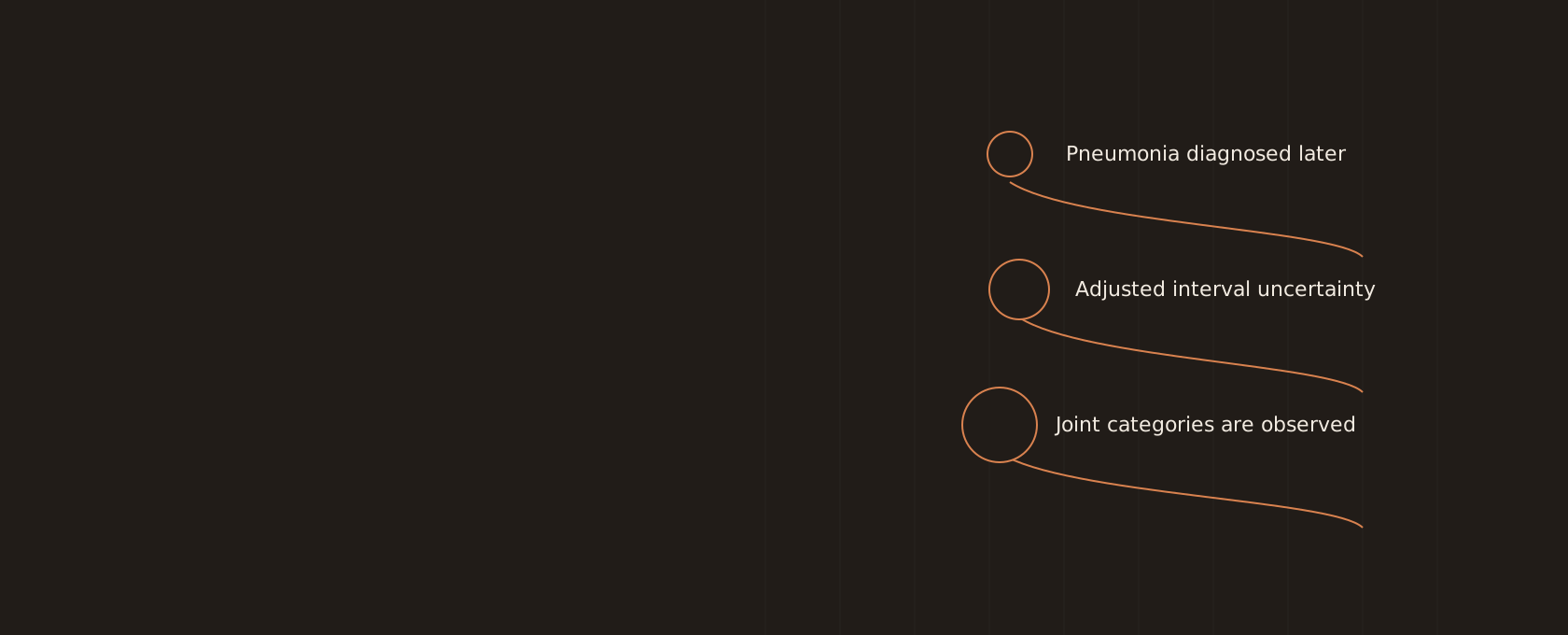
| 2017 · Kunutsor SK ↗ | prospective cohort Middle-aged male population Participants: 2210. habitual sauna | With the most extensive reported adjustment, pneumonia HRs versus ≤1 weekly session were 0.72 (95% CI 0.57–0.90) for 2–3 sessions and 0.63 (0.39–1.00) for ≥4. The high-frequency interval reached the no-association boundary, and these remain cohort associations. Comparison: At most once-weekly sauna Adjustment affects precision |
| 2017 · Kunutsor SK ↗ | prospective cohort Middle-aged male population Participants: 1935. habitual sauna | Higher frequency was associated with lower incidence of a combined respiratory-disease endpoint; specific pneumonia estimates became less precise at high frequency. Comparison: At most once-weekly sauna Composite outcome spans different illnesses |
| 2021 · Kunutsor SK ↗ | prospective cohort General male cohort Participants: 2275. habitual sauna | Higher measured fitness and reported sauna frequency were associated with lower pneumonia incidence; the combined high categories had the lowest estimated hazard. Comparison: Joint fitness/frequency categories No COVID-19 outcomes measured |
The pneumonia signal is an association with later diagnoses
The pneumonia-focused KIHD report related existing sauna habits to hospital-diagnosed pneumonia during follow-up. More frequent use was associated with lower estimated hazard under the reported models. Exposure was not assigned, so the result should be described as an association rather than an established effect of beginning a preventive routine.
This page focuses on that diagnosis and the uncertainty around its estimates. It does not use the broader respiratory-composite result as though it were a separate pneumonia trial, or treat related joint analyses as independent populations. The evidence is worth investigating, but the design limits are consequential when a reader wants to prevent an infection. A favorable comparison between people with different habits does not establish what will happen if one person deliberately changes heat exposure while their other circumstances differ from the enrolled men.
Pneumonia was not a cold-symptom score
The endpoint was hospital-diagnosed pneumonia, not self-reported minor colds or immediate congestion. That distinction matters because an infection headline can move easily between outcomes. A diagnosis during follow-up and a change in symptoms over a short experimental visit are different measurements.
The cohort therefore does not establish that sauna relieves an ongoing episode, changes severity after diagnosis or improves a particular pathogen-specific outcome. Those claims would require appropriate direct evidence. A separate common-cold trial can answer an inhaled-air symptom question without reproducing the pneumonia endpoint. Keeping the diagnosis, timing and intervention together prevents the literature from becoming a single general claim about fighting infections. The present source is most useful when it remains a prospective observation of later pneumonia in its defined population.
The most extensively adjusted model is the one retained here
Compared with at most one weekly sauna, the most extensively adjusted pneumonia hazard ratio was 0.72, with a 95% confidence interval of 0.57–0.90, for 2–3 weekly sessions. For at least four sessions, it was 0.63, with an interval of 0.39–1.00. These are the registered estimates for the stated comparison and model.
Earlier adjustment stages produced different values. Selecting only the largest-looking association would make the result appear more certain than the full model discussion supports. A hazard ratio compares a modeled relative event rate over follow-up; it is not a personal probability of avoiding pneumonia or an absolute number of cases prevented. The estimate’s model, interval and reference group should remain visible whenever it is reused. They are part of the finding, rather than optional detail after a percentage headline.
An interval reaching one needs careful language
The highest-frequency confidence interval reaches the no-association boundary. That does not demonstrate that the true effect is exactly absent, but it does prevent describing the comparison as a precise or guaranteed protective effect. The point estimate and the uncertainty should be read together.
It also does not create a clinical reason to prefer the middle-frequency category. Differences in precision are not a randomized dose-selection result, and the categories describe established habits rather than assigned programs. A reader should resist converting statistical significance into a personal target. The cohort supplies an association with uncertainty, not a schedule optimized for prevention. More exposure cannot be assumed to yield more benefit, and a favorable interval cannot remove confounding or establish safety during an unrelated person’s intended routine.
The two frequency estimates also share a low-frequency reference. Their position beside each other is not itself a direct statistical comparison between the higher categories. A prevention claim about increasing from one higher category to another would need the appropriate contrast and causal support. This is another reason not to turn the displayed hazard ratios into a ladder of validated personal doses.
Adjustment is helpful without recreating assignment
The source reports models that account for measured risk factors, lifestyle characteristics and an inflammatory marker. Such adjustment can address some differences between people with different sauna habits. It cannot guarantee that every relevant characteristic was measured accurately or that habits remained unchanged after baseline.
The practical causal question concerns what would happen if an exposure were changed under a suitable comparison. A cohort with adjusted baseline categories does not fully answer it. Reasons for using sauna, underlying health and other associated behavior can remain relevant alternatives. The result is neither useless nor a randomized prevention effect. Grade C reflects a prospective source-specific signal whose interpretation still depends on confounding, measurement and applicability. Those uncertainties remain even when a model includes several familiar variables.
The fitness combination is not proven intervention synergy
The fitness-and-pneumonia paper found the lowest estimated hazard in men with higher fitness and more frequent sauna use. Fitness was objectively measured while sauna habits were reported. Those existing characteristics were not allocated as an exercise-plus-sauna prevention program.
The favorable combined estimate therefore does not by itself establish biological synergy or tell an already-fit reader the additional benefit of beginning sauna. Both characteristics and other underlying differences can vary between the reference and combined categories. This distinction is especially important when a title suggests broader disease implications. The analysis supports further study of a combination question, but it does not provide a guaranteed intervention effect simply because the combined category’s estimate is lower than other point estimates in the table.
The inflammation combination does not establish the pathway
The CRP-and-pneumonia paper related baseline inflammatory-marker levels and sauna frequency to later pneumonia. Its joint categories add a question about observed risk patterns. They do not show that sauna changed CRP or that a marker change caused the difference in later diagnoses.
A mediation claim would need evidence connecting exposure change, an appropriate intermediate change and the clinical outcome under suitable assumptions. The existence of a plausible explanation is not that demonstration. A person with a laboratory result also cannot infer that copying another frequency category recreates its estimated risk. This page keeps inflammation as a mechanistic question, rather than turning a baseline marker contrast into an anti-inflammatory prevention prescription. The cohort did not expose people during pneumonia or study how heat affects an ongoing episode.
Several KIHD titles do not mean several independent populations
The respiratory-composite, pneumonia-only and joint-category publications arise from related KIHD data. Different participant counts, exclusions or analyses do not automatically establish entirely independent samples. The underlying research setting and possible overlap should remain visible in an evidence summary.
Each paper can still add something useful. The composite defines a broader diagnostic question, the pneumonia report focuses on one endpoint and adjustment, and the joint reports examine combinations with fitness or inflammation. Those are analytical contributions rather than proof that the same prevention effect has been reproduced in multiple new populations. A fair count should distinguish publications from independent cohorts. That prevents repeated discussion of related findings from creating more confidence than the underlying replication supports.
COVID-19 and common-cold claims need separate evidence
The fitness paper raised possible implications for COVID-19 but did not measure COVID-19 outcomes. Its pneumonia association cannot establish prevention or reduced severity of that particular infection. A research question in a title remains a question when the necessary endpoint was not tested.
The randomized common-cold trial also cannot supply a missing pneumonia result. It compared inhaled hot and room-temperature dry air in a sauna setting and did not show a significant overall symptom benefit on its main measure. Isolated secondary differences do not turn it into positive evidence for general infection protection. These sources should be read side by side to clarify their boundaries, rather than combined as if every respiratory outcome confirmed the same clinical claim.
No preventive or acute-illness routine is established
The cohort categories do not specify a validated program for avoiding pneumonia. They lack the assigned comparison needed to determine the effect of deliberately beginning or increasing sauna. A protocol assembled from another study’s temperature, duration or cooling sequence would be a new combination untested for this outcome.
The evidence also does not recommend heat during an infection. Baseline habits and later diagnoses are different from intervening after symptoms begin. The study explorer can help inspect source definitions, while session tools organize assumptions; neither provides medical clearance or validates protection from the entered settings. A reader with symptoms, a diagnosis or medication concerns should discuss the actual clinical question with a qualified clinician rather than translating a relative cohort estimate into personal care instructions.
What stronger evidence and this review can offer
Independent populations, better repeated habit measurement and appropriate assigned prevention comparisons would address different uncertainties. A systematic review can organize the literature, but it does not create an additional original population or eliminate heterogeneity by collecting more citations. The dry-sauna review’s small varied evidence base is context rather than a missing pneumonia trial.
This page is an abstract-level synthesis of refreshed primary sources and registered findings. Full-text outcome procedures, every statistical choice, funding and conflicts of interest were not independently audited; unreported details remain unknown. The historical safety review names unstable angina, recent myocardial infarction and severe aortic stenosis as contraindications and warns about alcohol, without offering comprehensive clearance. The justified conclusion remains a qualified observed association with pneumonia, not a universal prevention promise, a COVID-19 claim or advice to use sauna when ill.
Inspect the assumptions
Explore the session planner.
This planning tool describes a routine. It does not estimate a health benefit or provide medical clearance; the study exposures discussed above remain separate research methods.
Interactive workspace
In-memory checkpoint · no medical clearance
Pause for the personal context.
Check every item that applies or that you are unsure about. Current serious symptoms need appropriate care, not a tool result.
Context, with limits
- Checkpoint
- Complete the acknowledgment
A checklist cannot assess every relevant condition. No answer is medical clearance. Responses are in memory only, and are reset on reload.
Calculated on your device. Theme and unit preferences can be stored locally; health answers, weights and logs remain in memory. A shared settings URL contains its visible planning inputs.
Open the complete tool and methodologyExplore the evidence with a tool.
Questions, considered
Questions about this evidence
Why use the fullest pneumonia model instead of the largest-looking effect?
The models account for different measured factors, and their estimates and precision change. Selecting whichever percentage appears strongest would hide that context. The guide retains the most extensively adjusted result with its reference and confidence interval, while recognizing that adjustment still does not turn reported habits into a randomized preventive intervention.
Follow the sourceDoes the high-frequency interval reaching one identify a safe target?
No. It describes uncertainty around an observational association, not the safety or optimality of an exposure category. It neither proves a true effect is absent nor establishes a guaranteed benefit. Frequency groups were existing habits, so their statistical pattern cannot determine how much heat an individual should pursue for prevention.
Follow the sourceWhy can high sauna frequency mean different things across pneumonia papers?
The publications used different category definitions and reference comparisons, particularly in joint analyses. A high label therefore does not by itself identify the same exposure contrast. Check the actual threshold and what other characteristic changes before comparing estimates. These definitions cannot be averaged into one personal preventive dose merely because every paper concerns pneumonia.
Follow the sourceDoes the combined fitness category show the extra benefit of starting sauna?
It compares people with existing characteristics rather than assigning sauna to an otherwise identical fitness program. The lowest combined estimate can motivate research without establishing causal synergy or a personal add-on effect. Underlying health and behavior differences remain relevant, and the study did not measure COVID-19 protection despite discussing possible implications.
Follow the sourceWould changing CRP reproduce the joint inflammation finding?
That intervention was not tested. CRP and sauna habits were measured at baseline, and their categories were related to later pneumonia. The result does not demonstrate that sauna changed the marker or that the marker caused the observed difference. A causal mediation account requires stronger evidence than a favorable joint-category comparison.
Follow the sourceCan the pneumonia cohorts guide sauna use after respiratory symptoms begin?
They did not test that situation. Existing habits were related to later diagnoses, rather than heat being assigned during an acute episode. The common-cold trial also addressed a different inhaled-air symptom question and had a null overall result. These sources therefore do not supply an acute-illness heat recommendation or replace clinical assessment.
Follow the sourceFollow the evidence
Sources & references
Research summaries in this edition are based on indexed abstracts unless otherwise noted. A source link is not a claim of medical review.
- Frequent sauna bathing may reduce the risk of pneumonia in middle-aged Caucasian men: The KIHD prospective cohort study.
Kunutsor SK, Laukkanen T, Laukkanen JA
Volume 132, pages 161-163 · PMID 29229091
Open-access flag: not recorded.Abstract-level editorial review - Sauna bathing reduces the risk of respiratory diseases: a long-term prospective cohort study.
Kunutsor SK, Laukkanen T, Laukkanen JA
Volume 32, issue 12, pages 1107-1111 · PMID 28905164
Open-access flag: not recorded.Abstract-level editorial review - High fitness levels, frequent sauna bathing and risk of pneumonia in a cohort study: Are there potential implications for COVID-19?
Kunutsor SK, Laukkanen JA
Volume 51, issue 3, pages e13490 · PMID 33426640
Open-access flag: yes.Abstract-level editorial review - Attenuated Risk of Pneumonia Due to Inflammation by Frequent Sauna Baths: A PROSPECTIVE COHORT STUDY.
Kunutsor SK, Jae SY, Laukkanen JA
Volume 42, issue 1, pages 59-63 · PMID 33797457
Open-access flag: not recorded.Abstract-level editorial review - Visiting a sauna: does inhaling hot dry air reduce common cold symptoms? A randomised controlled trial.
Pach D, Knöchel B, Lüdtke R, Wruck K, Willich SN, Witt CM
Volume 193, issue 11-12, pages 730-734 · PMID 21143077
Open-access flag: not recorded.Abstract-level editorial review - Clinical Effects of Regular Dry Sauna Bathing: A Systematic Review.
Hussain J, Cohen M
Volume 2018, pages 1857413 · PMID 29849692
Open-access flag: yes.Abstract-level editorial review - Benefits and risks of sauna bathing.
Hannuksela ML, Ellahham S
Volume 110, issue 2, pages 118-126 · PMID 11165553
Open-access flag: not recorded.Abstract-level editorial review