| Study | Design & population | Finding & comparison |
|---|---|---|
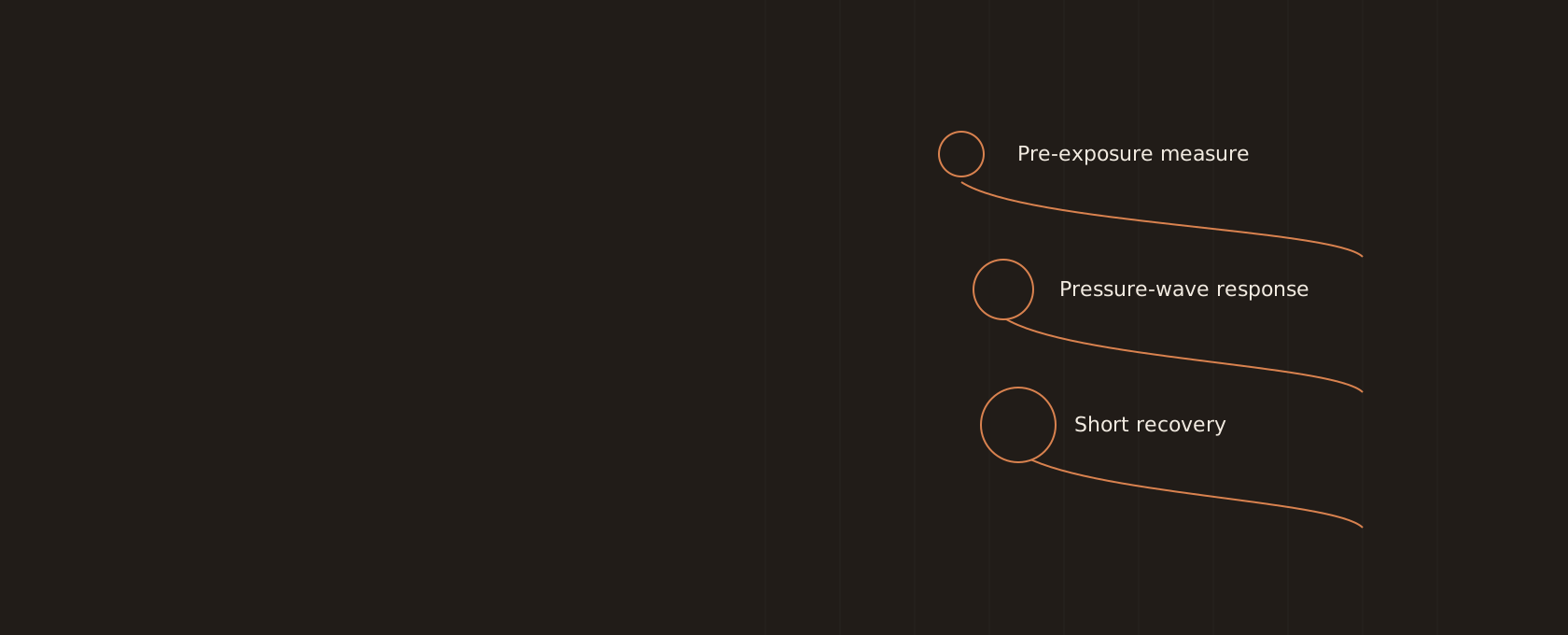
| 2018 · Lee E ↗ | nonrandomized acute experimental study Asymptomatic adults with cardiovascular risk factors Participants: 102. Finnish sauna · Acute plus 30-minute recovery | Pressure-wave speed and blood pressure fell immediately after exposure; some changes persisted during the short recovery observation. Comparison: Within-person pre-exposure measurement No randomized comparison |
| 2018 · Laukkanen T ↗ | Single-session experimental before-after study At least one cardiovascular risk factor Participants: 102. Sauna | Blood pressure and pulse-wave velocity fell after exposure, but the study did not establish durable changes or fewer cardiovascular events. Comparison: Before, immediately after and recovery No unheated comparator described |
| 2023 · Debray A ↗ | randomized controlled trial Stable coronary artery disease Participants: 41. Finnish sauna · 8 weeks | Heat-acclimation measures changed, but endothelial function, stiffness and blood-pressure changes did not favor sauna over control. Comparison: Lifestyle maintenance Small stable-CAD sample |
Original publication: Sauna exposure leads to improved arterial compliance: Findings from a non-randomised experimental study.
The question was about arterial behavior around heat
The publication examined short-term changes in arterial stiffness and hemodynamics around a sauna session. Hemodynamics concerns the movement of blood and the associated pressures. This distinguishes the paper from a cohort asking who later experiences a clinical event: it observes measurements over a much shorter period and looks for a physiological response.
The original title emphasizes improved arterial compliance, but the design should remain visible beside that interpretation. Participants were not randomized to heated and unheated conditions. The experiment can describe a pattern consistent with an acute response; it cannot isolate a durable prevention effect. Its distinctive value is the closer view of pressure-wave and recovery measurements, provided those measurements are not translated into a claim that arteries have permanently become healthier.
Why pulse-wave velocity needs careful language
Pulse-wave velocity describes how quickly a pressure wave travels through the measured arterial segment. It is a useful marker related to stiffness, but its value is influenced by conditions at the time of testing. That makes the surrounding blood-pressure changes relevant when interpreting the lower post-sauna measurement.
The verified fact record retains the direction of the observed changes without treating the result as structural proof. A person can have a different acute vascular measurement without the experiment demonstrating long-term alteration of the artery wall. Readers should therefore resist replacing a technical endpoint with a broader phrase such as younger arteries. The study did not measure vascular age as a personal outcome, and its reported time window does not establish what persisted during normal life after the observations ended.
Recovery is part of the result
Measurements were taken before exposure, immediately afterward and during a short recovery observation. Some changes remained evident during recovery, so the paper offers more than an isolated reading at the sauna door. Yet recovery within the experimental visit is still an acute period, rather than evidence of a change sustained across days or months.
This is an important distinction for anyone trying to infer a weekly routine from a physiological paper. A transient effect that lasts into recovery could be worth investigating, but its duration outside the measured window remains unknown. The observation does not tell researchers how often exposure would need to recur to maintain a clinical effect, whether the same response persists with repeated use, or whether a longer exposure would improve the outcome.
What an unheated time comparison would add
Because the experiment was nonrandomized and relied on within-person pre-exposure measurements, it cannot fully separate sauna from all other changes occurring during the visit. Rest, repeat testing and recovery procedures can influence measurements. A similar unheated condition would help estimate how much change might occur without the heat exposure.
The absence of that comparison should change the strength of the claim, rather than lead to either dismissal or certainty. The measured responses are useful observations under defined conditions. The causal question remains how those responses differ from a plausible alternative over the same time. A subsequent randomized design could improve that comparison, while repeated follow-up would address persistence. Those are separate design improvements because control, allocation and duration solve different problems.
Why a longer randomized trial matters
The stable-coronary-disease trial supplies a different kind of evidence: an assigned repeated sauna program compared with lifestyle maintenance. It did not find vascular-marker changes favoring sauna despite evidence of heat acclimation. Its participants, intervention length and outcomes differ from this acute experiment, so the two results cannot be treated as measurements of one identical effect.
They do show why the chain from immediate response to sustained benefit requires testing. Heat acclimation, arterial stiffness markers and clinical outcomes are distinct concepts. A favorable acute measure does not guarantee a favorable result after repeated exposure in a clinical population. Equally, that later null trial does not erase the immediate measurements here. The useful synthesis preserves the scope of each design and asks which link in the proposed chain it actually evaluates.
An abstract unit issue is left unresolved
The indexed abstract contains an apparent inconsistency in the units reported for an ejection-time measure. This summary does not silently correct it or reuse the questionable numerical value. Resolving it would require checking the full methods, tables or a correction against the original publication.
That choice illustrates a broader editorial principle: a number being present in an indexed abstract is not sufficient reason to reproduce it when its meaning is uncertain. Omitting one unresolved detail does not prevent discussion of the independently interpretable pressure-wave and blood-pressure findings. It does prevent a source ambiguity from becoming a new, confidently presented site fact. The unresolved unit is a review boundary, not an allegation that the whole study is invalid.
Source access and safety interpretation
The present appraisal is based on the rechecked indexed abstract and existing fact registry. PubMed and the DOI link identify the original article. Funding, conflicts of interest, complete measurement procedures and participant overlap have not been independently settled through full-text review. Null fields mean that the reviewed material does not supply an answer, not that no funding or competing interests existed.
Clinical safety should remain separate from whether a measurement moved favorably. The safety review cited on this page names unstable angina, recent myocardial infarction and severe aortic stenosis as contraindications and warns about alcohol-related harms. Its narrative scope is not a complete risk checklist. The emerging evidence grade applies to this short-term physiological observation; it does not authorize reproducing the exposure as a vascular intervention.
Explore the evidence with a tool.
Questions, considered
Questions about this study
Was the arterial-compliance sauna experiment randomized?
No. Participants were assessed before and after a single exposure without a randomized comparison group. The observed pressure-wave and blood-pressure changes describe immediate physiology under those conditions. They cannot establish how much of the change would differ from resting or whether it persists across weeks of regular sauna use.
Follow the sourceHow long were vascular responses followed in the single-session compliance study?
The experiment measured participants immediately after exposure and during a short recovery period. Some changes remained during that observation window. That is different from demonstrating a lasting reduction in arterial stiffness or blood pressure, and much further from showing fewer cardiovascular events over months or years of sauna use.
Follow the sourceDid the compliance experiment establish benefit in people without cardiovascular risk factors?
Its participants were asymptomatic but had at least one cardiovascular risk factor. That selected population should remain visible in a summary. An immediate average response in these adults does not establish the same magnitude in every healthy user, nor does it provide personalized guidance for people with diagnosed cardiovascular disease.
Follow the sourceFollow the evidence
Sources & references
Research summaries in this edition are based on indexed abstracts unless otherwise noted. A source link is not a claim of medical review.
- Sauna exposure leads to improved arterial compliance: Findings from a non-randomised experimental study.
Lee E, Laukkanen T, Kunutsor SK, Khan H, Willeit P, Zaccardi F, Laukkanen JA
Volume 25, issue 2, pages 130-138 · PMID 29048215
Open-access flag: not recorded.Abstract-level editorial review - Acute effects of sauna bathing on cardiovascular function.
Laukkanen T, Kunutsor SK, Zaccardi F, Lee E, Willeit P, Khan H, Laukkanen JA
Volume 32, issue 2, pages 129-138 · PMID 29269746
Open-access flag: not recorded.Abstract-level editorial review - Finnish sauna bathing and vascular health of adults with coronary artery disease: a randomized controlled trial.
Debray A, Gravel H, Garceau L, Bartlett AA, Chaseling GK, Barry H, Behzadi P, Ravanelli N, Iglesies-Grau J, Nigam A, Juneau M, Gagnon D
Volume 135, issue 4, pages 795-804 · PMID 37650138
Open-access flag: not recorded.Abstract-level editorial review - Benefits and risks of sauna bathing.
Hannuksela ML, Ellahham S
Volume 110, issue 2, pages 118-126 · PMID 11165553
Open-access flag: not recorded.Abstract-level editorial review