| Study | Design & population | Finding & comparison |
|---|---|---|
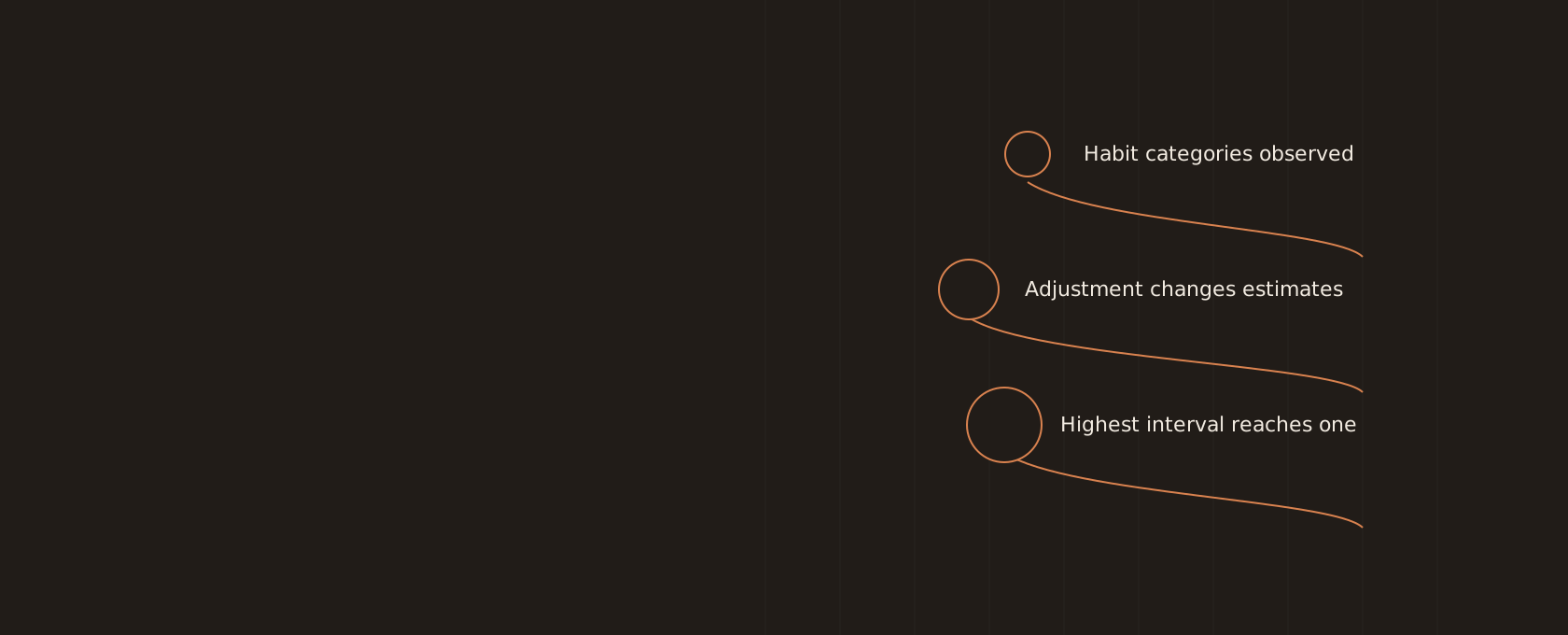
| 2017 · Kunutsor SK ↗ | prospective cohort Middle-aged male population Participants: 2210. habitual sauna | With the most extensive reported adjustment, pneumonia HRs versus ≤1 weekly session were 0.72 (95% CI 0.57–0.90) for 2–3 sessions and 0.63 (0.39–1.00) for ≥4. The high-frequency interval reached the no-association boundary, and these remain cohort associations. Comparison: At most once-weekly sauna Adjustment affects precision |
| 2017 · Kunutsor SK ↗ | prospective cohort Middle-aged male population Participants: 1935. habitual sauna | Higher frequency was associated with lower incidence of a combined respiratory-disease endpoint; specific pneumonia estimates became less precise at high frequency. Comparison: At most once-weekly sauna Composite outcome spans different illnesses |
| 2022 · Kunutsor SK ↗ | prospective cohort General middle-aged/older male population Participants: 2264. habitual sauna | Higher sauna frequency was associated with lower pneumonia hazard, while higher CRP predicted greater risk; joint-category estimates were observational. Comparison: Joint CRP and frequency categories Not randomized |
Original publication: Frequent sauna bathing may reduce the risk of pneumonia in middle-aged Caucasian men: The KIHD prospective cohort study.
The paper focuses on a specific diagnosis
This report examined later hospital-diagnosed pneumonia in relation to baseline sauna habits. That is narrower than the respiratory-composite paper, which grouped pneumonia with asthma and COPD. A disease-specific analysis is valuable because a combined outcome cannot automatically tell readers how each component behaves.
The original title, Frequent sauna bathing may reduce the risk of pneumonia in middle-aged Caucasian men, should be read with its cohort design attached. The exposure was observed, not assigned. The paper can describe a prospective association while leaving uncertainty about whether starting sauna changes the chance of a diagnosis. It does not test what happens when someone with pneumonia enters a sauna or inhales hot air.
Baseline categories describe existing habits
Participants reported how often they already used sauna. The reference category was at most once weekly, with higher-frequency categories compared against it. These descriptors are not randomized doses, and the study does not define a complete exposure program for a new user.
This matters when an association is translated into a recommendation. Choosing to start or increase sauna use changes behavior within a person, while the cohort compares people with different pre-existing habits and characteristics. Adjustment helps address measured differences without guaranteeing that the groups differ only in heat exposure. The applicable population is middle-aged men in the Finnish study setting, not a universal sample of people seeking protection from infections.
The most adjusted estimates retain uncertainty
With the most extensive reported adjustment, pneumonia hazard ratios compared with at most one weekly session were 0.72, with a 95% confidence interval of 0.57–0.90, for 2–3 sessions, and 0.63, with an interval of 0.39–1.00, for at least four sessions. These are the exact model-specific values retained in the registered fact.
The highest-frequency interval reaches the no-association boundary. It should not be represented as a precise or guaranteed protective effect. A hazard ratio describes the modeled relative event rate over follow-up rather than an individual’s absolute probability of avoiding pneumonia. The interval also does not account for every possible source of bias. Keeping estimate, model, comparator and uncertainty together is more informative than remembering only an appealing percentage.
Additional adjustment changes the interpretation
The abstract reports sequential adjustment stages, with estimates and precision changing as more measured factors are considered. A summary should name which model it uses rather than choose the most favorable number. Mixing a point estimate from one stage with an interval from another would create a result not reported by the authors.
The later model remains observational even when lifestyle and inflammatory variables are included. Statistical adjustment does not assign a routine or prove a mechanism. It can reduce some competing explanations while leaving measurement error, changing habits and unmeasured characteristics relevant. This is particularly important for an infection-related headline, where readers may infer a specific biological defense that the cohort did not experimentally test.
The successive models are analyses of the same outcome information, not independent experiments. Their agreement or movement can inform interpretation, but a longer list of adjusted estimates does not increase the number of separately observed populations supporting the finding.
Inflammation categories do not demonstrate mediation
The related analysis of inflammation, sauna frequency and pneumonia considered joint baseline categories. Higher inflammatory-marker levels and lower sauna frequency were associated with higher observed risk, while other joint categories differed. Such contrasts can generate mechanistic questions without establishing that reducing inflammation caused a sauna-related benefit.
The cohort did not randomly change sauna exposure or an inflammatory marker. A lower hazard in a combined category cannot by itself establish causal mediation or justify a protocol aimed at altering that marker. Reading the joint analysis beside the pneumonia-only paper therefore sharpens the research question rather than solving it. Neither source authorizes using sauna during pneumonia or replacing clinical care with a habit category.
What further evidence would answer prevention
A more direct prevention test would need an assigned exposure comparison, suitable follow-up and clearly defined pneumonia outcomes. Independent observational populations would address another uncertainty: whether the association transfers beyond the original setting. Better repeated habit measurement could clarify changes after baseline.
These improvements solve different problems. More regression models from related participants do not replace independent replication, and a symptom experiment during a common cold does not supply a missing pneumonia endpoint. The emerging grade recognizes a prospective source-specific association with important limits. It leaves the practical question of a new preventive routine unresolved, especially when a reader differs in sex, age, baseline health or heat exposure from the study participants.
Review boundaries and personal suitability
The live indexed abstract was checked against the included source record and registered adjusted estimate. The PubMed and DOI links identify the original paper. Full-text outcome procedures, exclusions, funding and competing interests have not been independently audited for this summary. Unreported details have not been inferred from the authors’ conclusions.
The separate historical safety review names unstable angina, recent myocardial infarction and severe aortic stenosis as contraindications and warns about alcohol. It does not constitute comprehensive screening for someone with respiratory symptoms. A favorable baseline-habit association is not personal medical clearance. This source appraisal is intended to clarify a pneumonia outcome and its uncertainty, not to supply advice about using heat when ill.
Explore the evidence with a tool.
Questions, considered
Questions about this study
Why do pneumonia estimates change after additional adjustment in the KIHD paper?
Each model accounts for a different set of measured factors. Adding lifestyle and inflammatory variables changed the estimates and their precision, especially in the highest-frequency category. A responsible summary should identify the chosen model and preserve uncertainty rather than selecting a favorable percentage without explaining how it was obtained.
Follow the sourceWas the pneumonia endpoint based on self-reported colds?
No. The paper describes hospital-diagnosed pneumonia, not an ordinary-cold diary or a symptom score during sauna. Those outcomes differ substantially. Findings about later pneumonia cannot establish fewer minor colds, and they do not show that inhaling hot air improves symptoms when someone already has a respiratory infection.
Follow the sourceIs the pneumonia-only KIHD publication wholly independent of the respiratory-composite paper?
They draw on related KIHD participants and baseline sauna assessments, so they should not automatically be counted as independent replications. A disease-specific analysis can add useful detail while still sharing the underlying population. Evidence maps should distinguish additional endpoint analysis from confirmation in a new cohort or randomized trial.
Follow the sourceFollow the evidence
Sources & references
Research summaries in this edition are based on indexed abstracts unless otherwise noted. A source link is not a claim of medical review.
- Frequent sauna bathing may reduce the risk of pneumonia in middle-aged Caucasian men: The KIHD prospective cohort study.
Kunutsor SK, Laukkanen T, Laukkanen JA
Volume 132, pages 161-163 · PMID 29229091
Open-access flag: not recorded.Abstract-level editorial review - Sauna bathing reduces the risk of respiratory diseases: a long-term prospective cohort study.
Kunutsor SK, Laukkanen T, Laukkanen JA
Volume 32, issue 12, pages 1107-1111 · PMID 28905164
Open-access flag: not recorded.Abstract-level editorial review - Attenuated Risk of Pneumonia Due to Inflammation by Frequent Sauna Baths: A PROSPECTIVE COHORT STUDY.
Kunutsor SK, Jae SY, Laukkanen JA
Volume 42, issue 1, pages 59-63 · PMID 33797457
Open-access flag: not recorded.Abstract-level editorial review - Benefits and risks of sauna bathing.
Hannuksela ML, Ellahham S
Volume 110, issue 2, pages 118-126 · PMID 11165553
Open-access flag: not recorded.Abstract-level editorial review