| Study | Design & population | Finding & comparison |
|---|---|---|
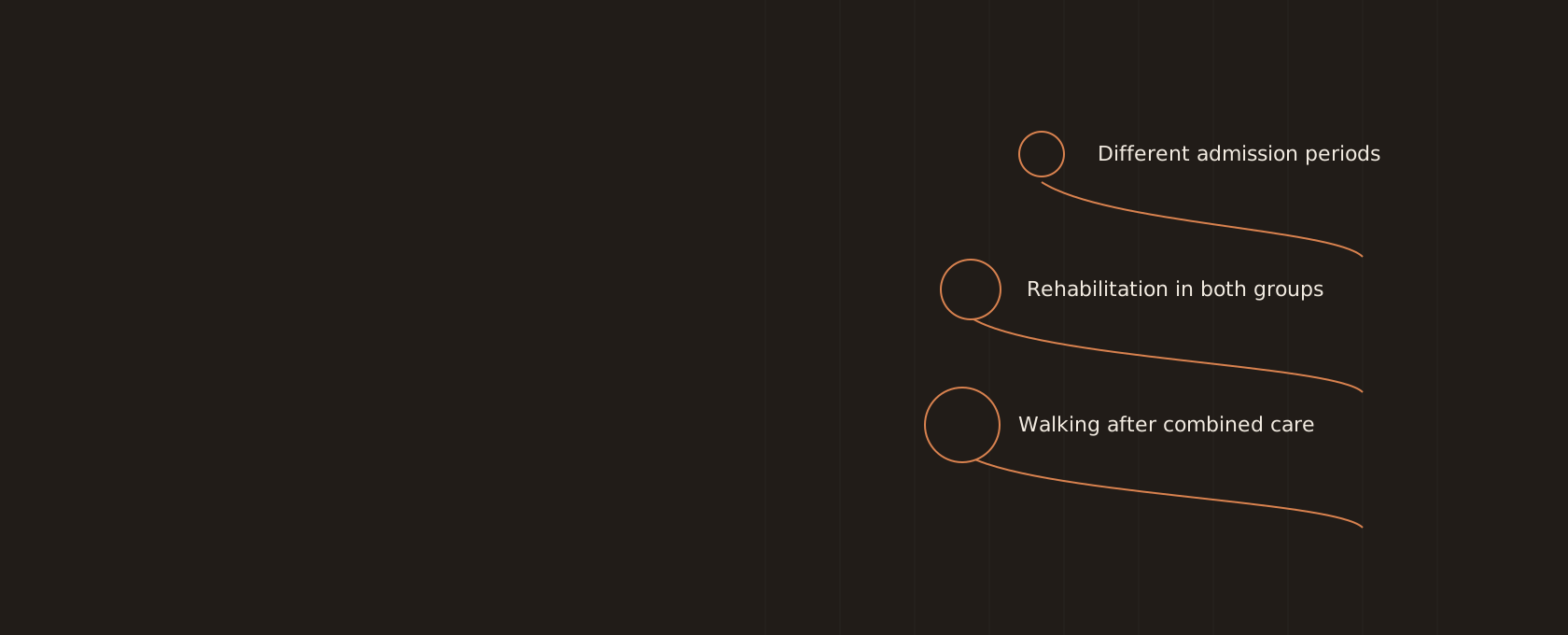
| 2025 · Yamamoto K ↗ | historical-control inpatient pilot study hospitalized decompensated heart failure with limited walking Participants: 34. Waon therapy plus cardiac rehabilitation · five-session inpatient program | The combined-care group walked farther after the program; allocation used different admission periods. Comparison: cardiac rehabilitation in an earlier admission period Nonrandom historical controls; small inpatient population; treatment bundle. |
| 2026 · Bekfani T ↗ | prospective uncontrolled mechanistic pilot Stable HFpEF outpatients; 18 completers Participants: 18. supervised sauna · 10-week intervention; follow-up 3 months after sauna withdrawal | Completers improved several functional measures during supervised exposure, with some exercise benefits declining after withdrawal; no adverse events were reported. Comparison: Own baseline and withdrawal follow-up Eighteen completers |
| 2016 · Tei C ↗ | randomized controlled trial Hospitalized advanced heart failure Participants: 149. far-infrared Waon · 10 days plus 30-minute covered rest per session | Functional and clinical measures favored Waon, but the between-group BNP change did not attain statistical significance; no serious events were reported. Comparison: Control with medical care Short inpatient intervention |
Original publication: Effect of Inpatient Cardiac Rehabilitation Combined with Waon Therapy on Exercise Capacity in Elderly Patients with Heart Failure: A Pilot Study.
The study tested a clinical addition to rehabilitation
The pilot compared conventional inpatient cardiac rehabilitation with rehabilitation combined with Waon in elderly patients hospitalized with heart failure. Its primary functional question concerned walking distance at completion of the short program. This is a combined-care comparison rather than a test of sauna in isolation.
The title should therefore retain both rehabilitation and the pilot designation. A reader interested in ordinary recreational sauna is considering a substantially different setting. The enrolled patients had decompensated heart failure and limited independent walking, and care occurred during hospitalization. The source can inform clinical research on an adjunct under those conditions without establishing what a person would gain by copying part of the program at home.
Admission period determined the comparison groups
Patients in the rehabilitation-only and combined groups were admitted during different calendar periods. This is historical-control allocation, not random assignment. Differences in selection, clinical practice or other features across time can therefore remain relevant to the outcome.
Adjustment for recorded factors can address some measured differences without eliminating every period-related influence. The design is more informative than observing a single group without any reference, but it does not create otherwise identical groups by allocation. A summary that calls the study randomized would overstate its causal strength. The appropriate description identifies the earlier-period comparator and keeps that limitation visible beside the favorable walking result rather than relying on the existence of two groups as sufficient proof of a sauna effect.
The walking endpoint was favorable after the program
The combined-care group had a longer six-minute walking distance at program completion. That is the registered source finding. A walking test is an important functional measure, but it should not be relabeled as every aspect of exercise tolerance, symptom resolution or long-term clinical recovery.
The reported analysis also adjusted for measured confounders, which does not erase the historical design. This summary retains the qualitative result rather than introducing new numerical effect sizes beyond the registry. The observation is promising for a defined clinical program and comparison. It cannot predict an individual’s walking gain from a different heat exposure or establish that sauna alone produced the difference between admission-period groups.
The endpoint was assessed after the program rather than serving as a complete trajectory of everyday activity. A longer test distance should not be translated into fewer admissions, longer survival or a guaranteed change in independent living.
Rehabilitation and other inpatient care were part of the setting
Both groups received cardiac rehabilitation, with Waon added in the later-period group. The broader hospitalization and pharmacotherapy context also matters. The study did not compare an isolated thermal intervention with no clinical care.
A favorable result in a treatment bundle needs an appropriate comparator to identify the added contribution. Here the temporal group difference limits that separation even though rehabilitation was shared. A reader should not attribute all within-group recovery to heat or transfer the whole program’s outcome to one component. A stronger trial could assign the addition within a comparable clinical framework and assess relevant outcomes and safety prospectively. The pilot helps define that question without already answering every causal part of it.
Controlled Waon evidence has mixed endpoints
The multicenter randomized Waon study in advanced heart failure found favorable functional and clinical measures but did not establish a significant primary between-group BNP change. That mixed pattern should remain explicit when it is used as context for walking outcomes.
A biomarker and a walking test answer different questions. A null biomarker comparison does not erase a functional observation, and a favorable walking result does not supply a missing primary biomarker effect. The randomized trial also cannot retrospectively remove calendar-period bias from this pilot. Each study needs its own endpoint, population and design label. The present emerging grade reflects a small historical-control contribution rather than a uniform clinical efficacy conclusion across all related publications.
No reported inpatient events is not universal safety
The pilot reported no adverse events during the hospital stay. That finding belongs to the observed program and small supervised sample. It cannot exclude uncommon harms, identify every vulnerable group or validate a different exposure at home.
This is particularly important because the patients’ clinical status makes supervision and selection consequential. Successful participation does not provide an individual self-screening rule. A person considering heat with heart failure needs advice from the qualified team that understands the condition and medications. The source should support careful clinical research rather than become a protocol for public users to reproduce. No temperature, timing or maintenance recommendation is derived here from the favorable walking endpoint.
What the abstract-level review can establish
The live indexed abstract was checked against the corpus and registered result. PubMed and the DOI identify the original publication. Full clinical selection, differences between admission periods, statistical modeling, funding and conflicts of interest have not been comprehensively reviewed. Details absent from the abstract remain unknown.
A deeper appraisal should assess those methods before using the pilot to estimate a causal benefit. The historical safety review supplies general named cardiac and alcohol cautions, not comprehensive clearance. The justified source-level conclusion is a favorable walking observation after rehabilitation plus Waon in this inpatient comparison, with historical allocation and shared care retained. It is not randomized proof of a sauna-alone or long-term clinical benefit.
Explore the evidence with a tool.
Questions, considered
Questions about this study
Was the elderly heart-failure Waon pilot randomized?
No. The comparison groups were formed from patients admitted during different calendar periods. That historical-control design leaves room for differences in care or patient selection unrelated to Waon exposure. The better walking outcome is promising, but it should not be described as randomized evidence of a sauna effect.
Follow the sourceDid the elderly Waon pilot test sauna without rehabilitation?
No. Waon was combined with inpatient cardiac rehabilitation and compared with rehabilitation alone from an earlier period. The patients were hospitalized with decompensated heart failure and limited walking ability. This clinical setting is substantially different from unsupervised recreational sauna use by people with heart disease.
Follow the sourceDoes the absence of adverse events in the elderly Waon pilot establish general safety?
No. No adverse events were reported during the studied hospital stay, but the small supervised sample cannot exclude uncommon harms or describe home use. The observation belongs to that combined inpatient program. It does not establish medical clearance for all older adults or all heart-failure patients.
Follow the sourceFollow the evidence
Sources & references
Research summaries in this edition are based on indexed abstracts unless otherwise noted. A source link is not a claim of medical review.
- Effect of Inpatient Cardiac Rehabilitation Combined with Waon Therapy on Exercise Capacity in Elderly Patients with Heart Failure: A Pilot Study.
Yamamoto K, Noda T, Ito K, Miura H, Murata M, Yokota C
Volume 28, issue 2, pages 99-105 · PMID 40980348
Open-access flag: yes.Abstract-level editorial review - Effects of Sauna bathing on Exercise Capacity and Muscle Function in HFpEF.
Bekfani T, Abo Hwach A, Moebert R, Seibel S, Burger A, Kaehne T, M Bekhite M, Vargas KG, Janashia M, Groscheck T, Daboul A, Rauwolf T, Behrendt T, Lichtenauer M, Paar V, Lemmer P, Friede T, Schega L, Biering-Sorensen T, Schulze PC, Anker SD, von Haehling S, Schmeisser A, Braun-Dullaeus RC
, pages xuag082 · PMID 41831305
Open-access flag: not recorded.Abstract-level editorial review - Waon Therapy for Managing Chronic Heart Failure - Results From a Multicenter Prospective Randomized WAON-CHF Study.
Tei C, Imamura T, Kinugawa K, Inoue T, Masuyama T, Inoue H, Noike H, Muramatsu T, Takeishi Y, Saku K, Harada K, Daida H, Kobayashi Y, Hagiwara N, Nagayama M, Momomura S, Yonezawa K, Ito H, Gojo S, Akaishi M, Miyata M, Ohishi M,
Volume 80, issue 4, pages 827-834 · PMID 27001189
Open-access flag: not recorded.Abstract-level editorial review - Benefits and risks of sauna bathing.
Hannuksela ML, Ellahham S
Volume 110, issue 2, pages 118-126 · PMID 11165553
Open-access flag: not recorded.Abstract-level editorial review