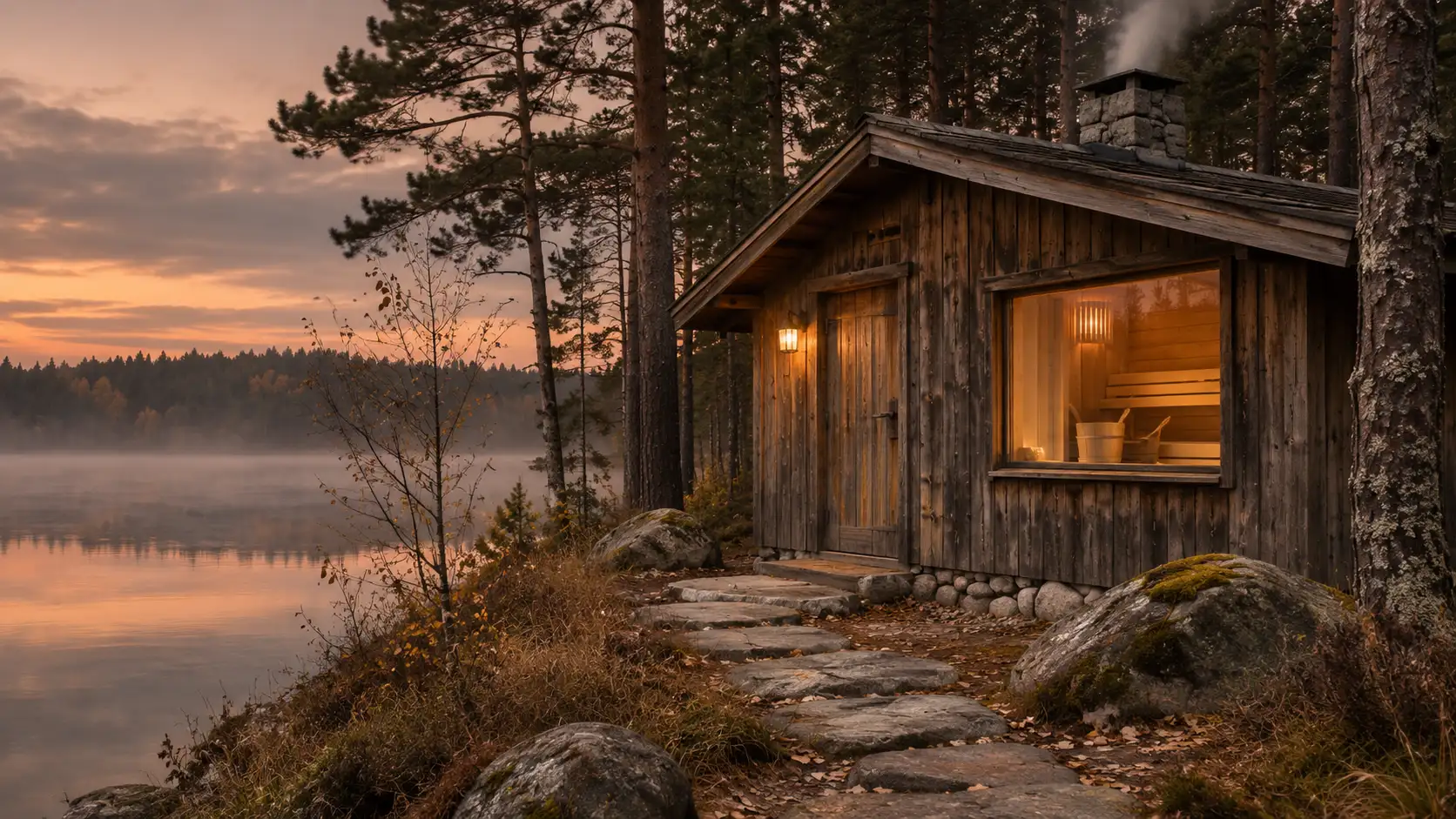
What does living sauna heritage mean?
The Finnish Heritage Agency describes a continuing tradition carried through bathing, customs, language and cultural expression. The important object is not simply an old building. The practice remains alive because people repeat it, teach it and adapt it in ordinary life as well as on occasions with special meaning.
Read heritage recognition as a responsibility to understand and sustain a practice. It is not a product certification, an architectural style guide or a medical endorsement. A contemporary room can participate in a living tradition without pretending that every household or community follows an identical script.
Who carries the tradition forward?
The Living Heritage account identifies everyday bathers, families, sauna associations and operators of shared facilities among the people who maintain the practice. That breadth matters. Finnish sauna culture is not owned by one resort aesthetic or confined to an isolated lakeside cabin, however familiar that image may be.
For a visitor, ask who operates the sauna and how its hosts explain the setting. A family invitation, a public facility and a hired room are different social situations. Learn the arrangements for that place rather than treating a general cultural introduction as permission to disregard its own customs.
How should a visitor approach a shared sauna?
Begin with the host’s instructions and consideration for the other bathers. Visit Finland explains that arrangements differ among settings and asks visitors to consider others when adding water to the stones. The useful lesson is attention to the shared room, rather than a performance of endurance or expertise.
Ask about clothing arrangements, washing facilities and the way water is used before entering. Observe the difference between learning a custom and prescribing it to everyone else. If a practice is unfamiliar or uncomfortable, a clear question to the host is more respectful than assuming there is only one acceptable experience.
| Before entering | In the shared room | When uncertain |
|---|---|---|
| Read the facility’s arrangements | Consider the other bathers | Ask the host |
| Clarify clothing and washing | Do not turn exposure into a contest | Describe what you need |
| Learn how that heater is used | Respect the setting’s pace | Accept that practices vary |
Why keep the Finnish words and their context?
Terms such as kiuas and löyly name parts of the practice that a generic wellness vocabulary can blur. Learn them as useful language, and keep the cultural account distinct from a health claim. Describing what bathers do is not the same task as proving an effect on a medical outcome.
This introduction concerns Finland. It does not stand in for Estonia’s smoke-sauna heritage, a banya, a hammam or another community’s bathing tradition. Follow those subjects through their own institutions and practitioners. Careful comparison begins by allowing each account to retain its particular setting, language and sources.
Explore the evidence with a tool.
Follow the evidence
Sources & references
Research summaries in this edition are based on indexed abstracts unless otherwise noted. A source link is not a claim of medical review.